By: Jennifer Dubose, BA, Psychology
What is Astraphobia?
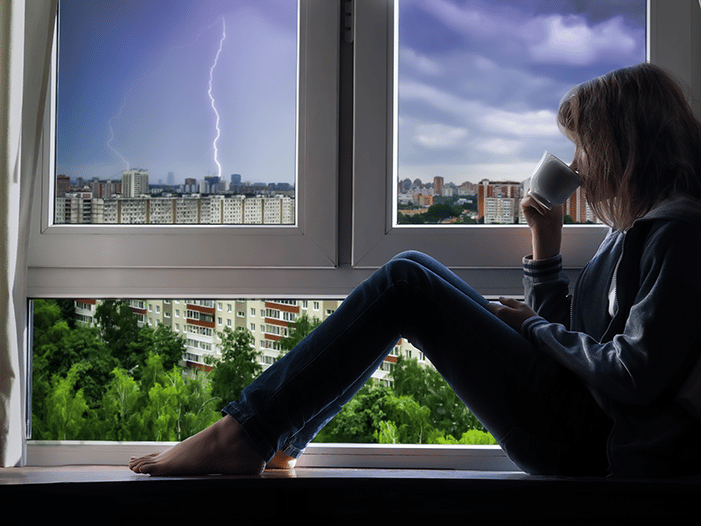
Lightning: it leaves you awestruck yet terrified, its golden bolts crashing against the night sky, followed shortly by rolling thunder that reverberates and echoes.
If a thunderstorm leaves you quaking under your blanket, you may be suffering from Astraphobia (pronounced [ass-trah-fo-bee-ah]). People who embody this phobia tend to also have Generalized Anxiety Disorder (ICD-10 Diagnosis code F41.1). Astraphobia is derived from the Greek word “Astrape,” meaning lightning.
Statistics
- Lightning strikes the United States about 25 million times a year.
- According to the National Weather Service, of the 330,000,000 people in the United States, only an average of 27 people die per year from a lightning strike.
- Your odds of being struck are 1 in 1.2 million.
- If you hear thunder, you are within 10 miles of lightning and should take shelter (National Geographic).
- Lightning is hotter than the surface of the sun.
- Lightning can strike up to 25 miles away from the parent thunderstorm.
Why are People Afraid of Lightning?
Traumatic Situations
It was June 6th, 1999. I was 8 years old. A huge storm had swept across the Midwest. While my family and I were tucked safely in our beds—visiting my grandparents in Minnesota—our home in Wisconsin was struck by lightning. It struck our electrical box, snaked through all the wiring in the home, and within an hour our two-story home was fully engulfed in flames. It was a miracle our entire family was out of state. When all was said and done, all that remained of our home was a clawfoot bathtub swaying on its pipes.
Though not physically present when our home burned down, a deep fear of lightning has raged in me since that day. I lay awake in fear when faced with troubling weather. My mom was forced to sing me to sleep when storms passed through. I watch the weather religiously, making sure I am safe at all times.
If you’ve experienced a traumatic situation—struck by lightning yourself, lost someone to a strike, or lost a home like I did—know that there is hope. You don’t have to be weighed down by your fears.
Fear of the Unknown
Even without a specific traumatic reason, just knowing a lightning strike could happen (though the chances are slim) can be terrifying. Storms are a normal, unpredictable part of nature, and a fear of the unknown is arguably a biological imperative — an instinct to protect ourselves.
Do You Have Astraphobia?
A healthy fear of lightning is natural. But when does it turn into a phobia?
- Your life is planned around the weather — you don’t travel, make plans with friends, or leave home if there’s a chance of a storm
- Thunderstorms leave you terrified, shaking, and exhibiting panic attack symptoms (hyperventilating, racing heart, feeling faint)
- Hiding somewhere extreme, like a bathtub, during storms
- Inability to sleep when lightning and thunder are present
How to Overcome the Fear of Lightning
Familiarity with Lightning Safety
- If outdoors, get inside immediately — a tree or pavilion won’t protect you. At minimum, get into a vehicle with a metal roof, and avoid touching door handles or metal.
- If you hear thunder or see lightning, seek shelter inside a structure with plumbing or electrical wiring — lightning will travel through those surfaces first, typically giving you time to escape.
- Avoid being the tallest thing around — this increases your risk of being struck.
- Rubber-soled shoes will not protect you from a strike — that’s a myth.
Pro tip: For more lightning safety tips, visit NOAA.gov and check your local weather; National Geographic also has helpful articles on this.
Use a Weather App
Following the weather (The Weather Channel, AccuWeather, or NOAA’s radar) can ease anxiety at home or while traveling by helping you know exactly where a storm is tracking — a healthy awareness rather than an obsession.
Weighted Blanket
Weighted blankets are said to mimic deep touch pressure therapy, and have proven useful for people with autism, sensory processing disorders, or anxiety — the pressure is thought to release oxytocin, producing a calming, hug-like effect. Blankets are typically made to about 10% of body weight so they don’t feel smothering. (Sensacalm weighted blankets referenced.)
Deep Breathing and Prayer
- Slow, deliberate breathing — in through the nose, out through the mouth — especially useful lying in bed as a storm builds.
- Prayer or meditation for peace and relief from anxiety.
Therapy
If you’ve experienced a traumatic situation, working through it alone can be difficult. A licensed therapist can help — BetterHelp is recommended as one option, along with local resources found via a quick search.
Tags: afraid of lightning, Astraphobia, Fear of lightning
Related post links: Overcome Aviophobia (fear of flying), Gamophobia (fear of commitment), Overcome Somniphobia (put your fears to bed)